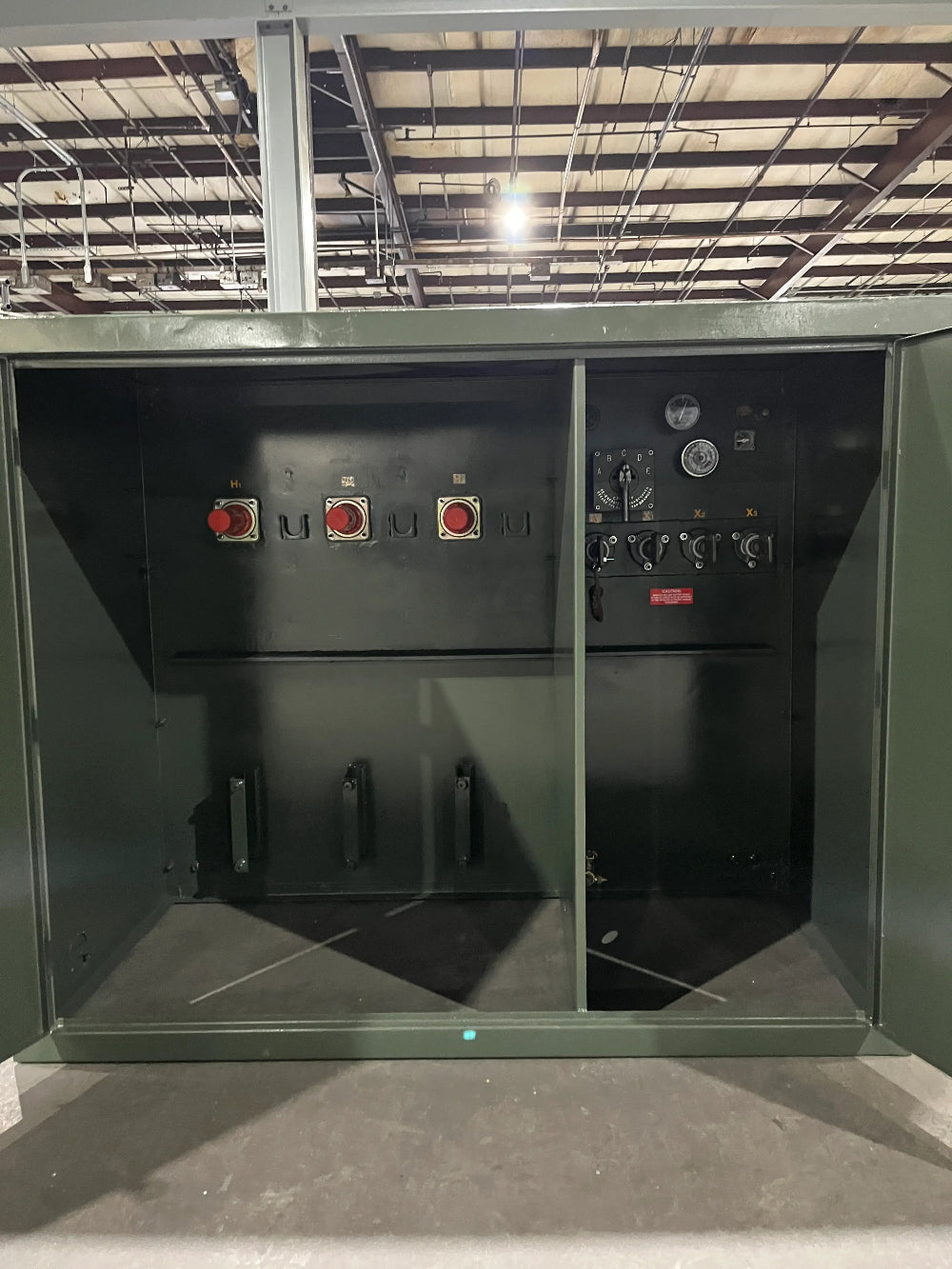
Valuation Guide
Oil-filled vs. dry-type: which is worth more?
Sellers ask this constantly, and the honest answer is that the fluid is not what decides it. Condition and rating dominate. But the two families do behave differently on freight, compliance, and resale depth — and those differences show up in the offer.
Start here
Construction is a tiebreaker, not the deciding factor
A 2,500 kVA oil-filled padmount that passes electrical testing and a 45 kVA dry-type unit that failed years ago are not really in the same conversation, and the fluid is the least interesting difference between them. Rating and working condition set the range; construction type moves you around inside it.
Maddox, a transformer remanufacturer, publishes a resale range spanning a couple hundred dollars for some low-voltage dry-type transformers at the bottom to up to hundreds of thousands of dollars for some substation transformers at the top. That spread exists mostly because of capacity and condition — not because one family is inherently premium.
Where construction genuinely matters is in the friction around the sale: what has to be documented, how it has to be moved, and how many buyers can take it. That is what the comparison below covers.
These are reference figures, not quotes. Every price on this page is attributed to a named third party with the date it was published. Scrap and equipment prices move constantly, vary by region and by yard, and no yard or buyer is obliged to honor a price published anywhere else. We do not operate a price feed. For a number you can act on, send us your nameplate details.
Side by side
Five differences that reach the offer
| Dimension | Oil-filled | Dry-type |
|---|---|---|
| Where the value usually sits | Larger kVA ratings and deeper utility and industrial resale demand, so working units more often clear as equipment. | Commonly smaller indoor units. Maddox cites the low end of its resale range — a couple hundred dollars — for some low-voltage dry-type transformers. |
| Weight per kVA | Heavier for a given rating once the tank and fluid are counted, which raises both freight cost and scrap weight. | Lighter for a given rating, so freight is cheaper but there is less material to recover if it scraps. |
| Compliance overhead | The fluid must be accounted for. Under 40 CFR 761.2, older mineral-oil equipment with no established concentration must be assumed PCB-contaminated. | No dielectric fluid, so the PCB question does not arise. This removes a step from the sale. |
| Handling on removal | Must stay upright and sealed. Leaks turn a straightforward pickup into a spill response. | Simpler to move, but windings and insulation are exposed to moisture and contamination if stored outdoors. |
| What buyers ask first | Year, fluid type, gallons, and whether it has been tested. | Rating, voltages, enclosure type, and whether it has been kept dry and indoors. |
Figures referenced as of July 31, 2026. Resale range attributed to Maddox; regulatory statements quoted from 40 CFR 761.2.
If it scraps instead
As scrap, both families are priced as assemblies
Once a unit is material rather than equipment, the construction question mostly collapses into a weight question. Yards buy whole transformers as mixed assemblies, and the posted price reflects the steel and labor wrapped around the windings, not the copper price you see quoted for clean wire.
On Rockaway Recycling's price list — last modified July 27, 2026 — whole copper transformers post at $0.21 / lb while #1 bare bright copper wire on the same list posts at $5.35 / lb. The winding material inside a dry-type unit faces the same discount.
The practical difference is tonnage: an oil-filled unit of the same rating simply weighs more, so a scrap payout calculated per pound lands higher — before the fluid handling that has to be paid for out of it.
We buy both. Send the nameplate either way.
You do not need to work out which category yours falls into or what it should fetch. A nameplate photo and a note on whether the unit was in service gets you a real number for your actual unit.
Sources
- [1]Maddox — Recycle Surplus Transformers for 5X Their Scrap Value — Resale range cited on this page, including the low-voltage dry-type low end and the substation high end. Maddox is a remanufacturer, so this is an interested party's published figure. (October 31, 2023)
- [2]Rockaway Recycling — Copper Transformers — Whole copper transformer price of $0.21/lb and #1 bare bright wire at $5.35/lb, taken from the same yard price list on the same day. (price list last modified July 27, 2026)
- [3]40 CFR 761.2 — PCB concentration assumptions for use — Basis for the statement that older mineral-oil equipment with no established PCB concentration must be assumed PCB-contaminated. (verified July 31, 2026)