Valuation Guide
Transformer decommissioning checklist
Most of the value lost on a decommissioned transformer is lost in the first hour of the removal, not at the negotiating table. This is the sequence that protects it — written for the person who has to get the unit out, not for a compliance binder.
The expensive mistake
Removal decisions quietly set the price
A transformer's resale case rests on being able to show what the unit is and that it was sound when it came out of service. Every step of a rushed removal chips away at that: the nameplate goes missing, the bushings get broken, the tank gets gouged, the paperwork never gets collected.
Maddox, a remanufacturer, states it pays 2–5 times the scrap value for units it can rebuild. That premium is only available on units that still look and document like equipment. A careless removal converts an asset into a scale weight, and the conversion is not reversible.
Scope note: this is a seller's checklist for protecting value, not an electrical safety procedure or a compliance plan. De-energizing, lockout/tagout, and fluid handling must follow your site's own qualified procedures and the applicable regulations.
In order
Nine steps, roughly in sequence
Price it before it comes out, not after
The order of operations matters more than anything else on this list. A unit still standing, still labeled, and not yet dragged across a yard is the easiest thing in the world to quote. Once it has been pulled, stacked, and scuffed, the resale case gets harder to make.
Photograph the nameplate while you can still reach it
Nameplates get painted over, corroded, and sheared off during removal. One straight-on photo in reasonable light, close enough to read every line, is the single most valuable document in the whole process.
De-energize, isolate, and lock out
This is qualified-electrician work performed under your site's electrical safety program. Transformers hold stored energy, and liquid units add hot oil to the picture. Nothing else on this list starts until this is properly done and verified.
Record the fluid situation
For liquid-filled units, note the fluid type and gallons from the nameplate, whether the unit has ever been tested for PCBs, and whether there is any visible leakage or staining. Leave the oil in the tank — draining it creates a waste stream you then have to manage and removes the sample a buyer needs.
Gather whatever service history exists
Test reports, maintenance records, PCB screening results, and the reason the unit came out of service all raise a buyer's confidence. Under 40 CFR 761.2(b), manufacturer documentation plus complete servicing records is one of only two ways a unit's PCB concentration can be established at all.
Assess access and rigging honestly
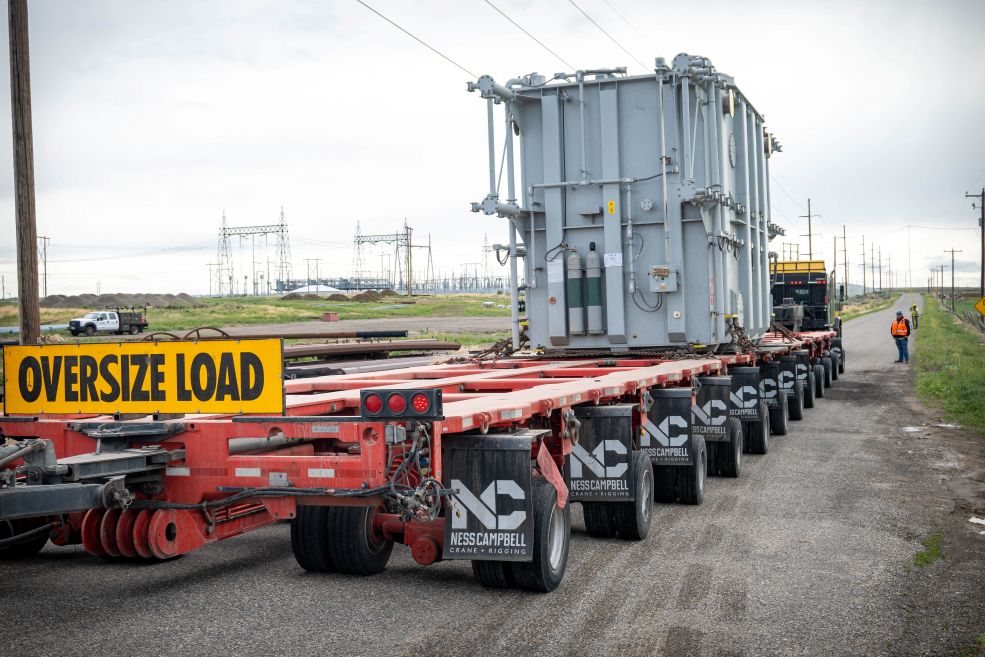
How does a truck reach the unit? Is there a crane, a forklift with the capacity, or does something have to be brought in? Are there doors, grade changes, curbs, or overhead lines in the way? Access constraints are a real cost and a schedule risk, and surfacing them early prevents a re-quote later.
Confirm weight and dimensions
Nameplate weight plus rough outside dimensions determine the trailer type and permits. This is also the number a scrap payout is calculated from, so it is worth having in writing rather than estimated.
Decide on lots before you sell piecemeal
If a plant closure or upgrade is producing several units, keeping them together as one lot is usually worth more than disposing of them one at a time, and it means one removal mobilization instead of several.
Agree who arranges freight, and when
Settle this before the removal date rather than during it. Establish who is loading, who is hauling, what documentation travels with the unit, and what the site needs cleared and when.
Before the removal date
Get the quote while it is still standing
Send the nameplate photo, the reason it is coming out, and a note on access. If there are several units, send the list. We will tell you which ones have a resale case and which are genuinely scrap — including when scrap is the right answer.
Sources
- [1]Maddox — Recycle Surplus Transformers for 5X Their Scrap Value — Basis for the 2–5 times the scrap value resale premium cited as the reason removal care pays. Maddox is a remanufacturer, i.e. an interested party. (October 31, 2023)
- [2]40 CFR 761.2 — PCB concentration assumptions for use — Paragraph (b), cited for the point that manufacturer documentation combined with complete servicing records is one of only two ways to establish PCB concentration. (verified July 31, 2026)