Valuation Guide
Transformer oil and PCB testing
If your unit is liquid-filled, the fluid is not a footnote — it is often the single largest factor in what happens to the asset. The good news is that the rules are written down, and this page quotes them rather than paraphrasing them.
The part sellers get wrong
"We never tested it" is not a neutral answer.
Most sellers assume that an untested transformer is simply an unknown, to be sorted out later. Under the federal rule, it is not. Where the PCB concentration of a unit has never been established, 40 CFR 761.2 tells you what you must assume instead — and for older equipment, the assumption is not the favorable one.
PCBs were manufactured domestically from 1929 until manufacturing was banned in 1979 under the Toxic Substances Control Act, and the EPA lists transformers and capacitors first among the products that may contain them. The regulatory hinge date for equipment is July 2, 1979.
None of this makes an old oil-filled transformer unsellable. It means the fluid question should be answered early, deliberately, and on paper — because the answer determines who can legally take the unit and what it is worth to them.
40 CFR 761
Three classes, two thresholds
Federal PCB regulation sorts electrical equipment into three concentration classes. The boundaries are 50 ppm and 500 ppm, and which side of them your unit falls on changes the handling, the paperwork, and the pool of buyers who can accept it.
under 50 ppm
Non-PCB
Outside the PCB equipment classes. Ordinary handling and ordinary resale, assuming the concentration is actually established.
50 ppm up to under 500 ppm
PCB-Contaminated Electrical Equipment
A defined regulatory class under 40 CFR 761.3, with its own servicing and marking provisions.
500 ppm and above
PCB Transformer
The most heavily regulated class under 40 CFR 761.3. Remanufacturers generally will not take these units.
Class names and thresholds per 40 CFR 761.2 and the definitions in 40 CFR 761.3.
What the rule presumes
The assumptions that apply when nothing was tested
These are the operative rules in 40 CFR 761.2, condensed. Note the difference between may assume and must assume — the regulation uses both, and the distinction is the whole point.
| If this describes your unit | Then the rule says | Citation |
|---|---|---|
| Mineral oil-filled equipment built before July 2, 1979, concentration never established | Must be assumed to be PCB-Contaminated Electrical Equipment — at or above 50 ppm but under 500 ppm. | 40 CFR 761.2(a)(2) |
| Pole-top or pad-mounted distribution transformer built before July 2, 1979 | Must be assumed to be mineral-oil filled. | 40 CFR 761.2(a)(2) |
| Equipment manufactured after July 2, 1979 | May be assumed non-PCB, meaning under 50 ppm. | 40 CFR 761.2(a)(2) |
| Mineral oil-filled equipment with an unknown date of manufacture | Must be assumed PCB-Contaminated. | 40 CFR 761.2(a)(2) |
| Pre-July 2, 1979 transformer holding 3 lb (1.36 kg) or more of a fluid other than mineral oil, concentration never established | Must be assumed to be a PCB Transformer — 500 ppm or above. | 40 CFR 761.2(a)(3) |
| Both the date of manufacture and the dielectric fluid type are unknown | Must be assumed to be a PCB Transformer. | 40 CFR 761.2(a)(3) |
| Transformers holding under 3 lb (1.36 kg) of fluid, plus circuit breakers, reclosers, oil-filled cable and rectifiers | May be assumed to contain under 50 ppm. | 40 CFR 761.2(a)(1) |
This is a summary, not legal advice. The controlling text is the regulation itself, and your state may impose additional requirements. Read 40 CFR 761 or consult your environmental contractor before making disposal or transport decisions.
Establishing concentration
Only two things count as an answer
Under 40 CFR 761.2(b), a unit's PCB concentration is established by one of exactly two routes. Institutional memory, a previous owner's verbal assurance, and "it looked fine" are not among them.
- 01
Testing the equipment.
- 02
Or: a permanent label, mark, or manufacturer documentation stating the PCB concentration at the time of manufacture — combined with service records or other documentation covering every fluid used in servicing the equipment since it was built.
What a sample covers
One draw, two different questions
PCB screening — a compliance question
Establishes which of the three regulatory classes the unit belongs to. This determines who may legally accept it and how it must be handled and documented.
Dissolved gas analysis — a condition question
Looks for the gases that internal faults generate, which is evidence about whether the unit is a resale candidate. Interpretation belongs to a testing firm working from the IEEE C57 guidance, not to a rule of thumb.
Do not drain the tank to "clean it up". Draining creates a fluid you now have to manage, removes the sample a buyer needs, and can take a resaleable unit off the table entirely. Leave the oil in it.
Send us what you have
Tell us the year and the fluid, and we can tell you the path
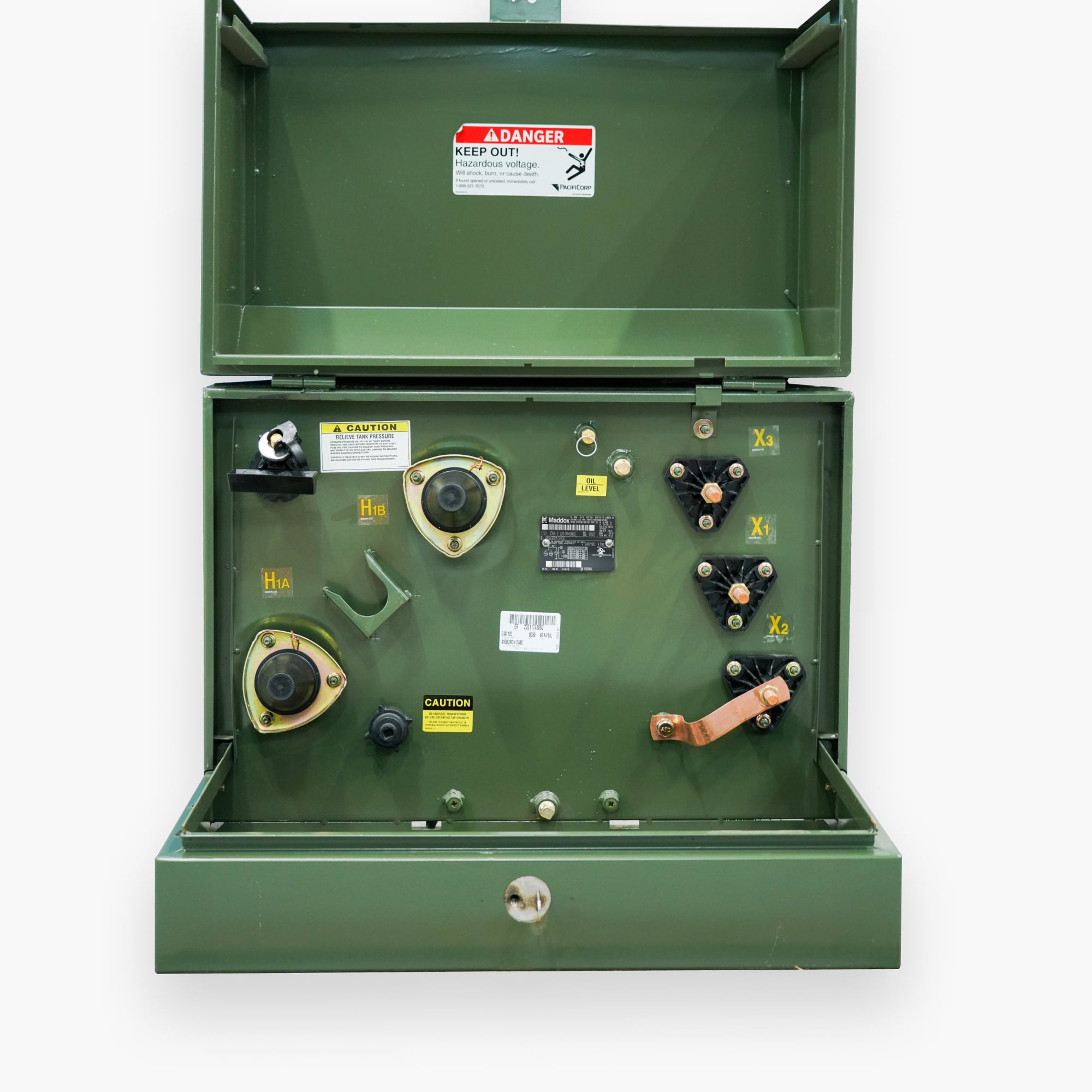
A nameplate photo showing the year of manufacture and the fluid type usually gets us far enough to explain your options — including whether screening is worth doing before you sell. If your unit does test as a regulated class, we will tell you that plainly rather than quoting you and backing out later.
Sources
- [1]40 CFR 761.2 — PCB concentration assumptions for use — All assumption rules and the 50 ppm / 500 ppm class boundaries quoted on this page. Section source note: 63 FR 35436, June 29, 1998, as amended at 64 FR 33759, June 24, 1999. Text verified against the eCFR. (verified July 31, 2026)
- [2]U.S. EPA — Learn about Polychlorinated Biphenyls — PCBs manufactured domestically from 1929 until manufacturing was banned in 1979 under TSCA; transformers and capacitors listed among products that may contain PCBs. (accessed July 31, 2026)
- [3]IEEE Standards Association — C57 family — Referenced for the point that dissolved gas analysis and electrical acceptance limits are interpreted against published standards rather than fixed rules of thumb.